Read the Conceptual Overview and then the Deep Dive below.
We need to seed grounded possibilities in the hands of those on the ground, at the right scale, in the context of an appropriate larger framework, letting life do its thing in complexity and emergence – because that's the way the real world works. For that to happen, philanthropy needs to do some soul searching. As NATO asks nations to commit 5% of GDP for war, and billions go into the development of AI, what should we be investing in life?
Philanthropy, despite its limitations, may be humanity's last hope to wriggle through the thorny entanglement of an extractive, destructive chapter (hopefully not the last chapter) in the story of humanity. Every 12-step program starts with a look at the reality in the mirror, often when you've hit rock bottom. You need to see the reality, and then act accordingly on that reality.
In this rock-bottom human moment, philanthropic players need to find wisdom and flow enough money while that money is still worth something (friendly reminder: money isn't a hard asset, but basically just a floating promise). Howard Buffett, as one of three siblings tasked with giving away the Buffett fortune, says that "foundations don't take risks. That's the greatest value we [philanthropists] have with our money – to try things that other people might not be able to try." Philanthropists are the only ones who can take money from the system and step outside of the system in service to life.
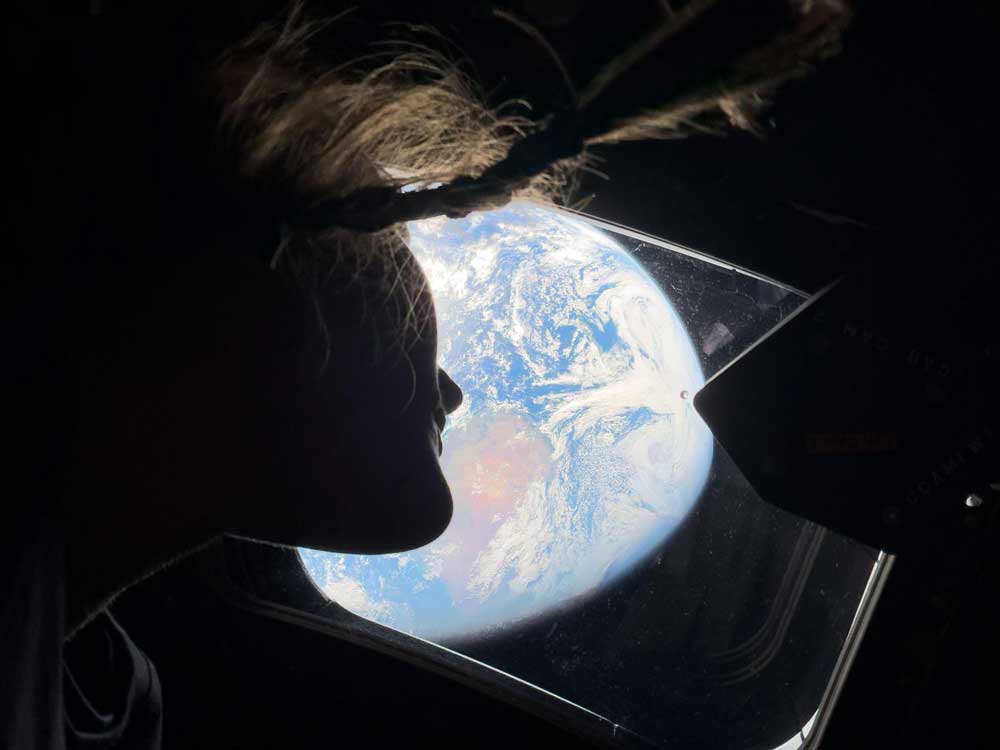
The Artemis II crew recently went farther away from the life systems of Earth than any other humans. As much as I felt awe looking at the photos, it also felt like they were taking the last selfies of a planet in peril.
When you "science the shit out of it," as EarthTrust Founder DJ White likes to say, Artemis II, promising settlement on the moon and Mars, becomes a stunt promoting a fantasy that has no basis in reality – the realities of gravity and radiation, what the human body needs to survive and stay healthy, how much fuel would be required to travel to Mars, and that no one is actually "living in space" because even the Space Station needs an umbilical cord to Earth. Reality is a pain like that, in the same way that we live in funding fictions of impacts and returns. An AI query (itself the result of billions in investment) tells me that the accumulated cost of the Artemis program from 2012 to 2025 is around $93 billion. How wise is chasing a space fantasy while the miracles of the most profound planet in the universe, which includes humanity itself, are squandered away?
Where I found some light in the mission was in the relationship of the crew of four astronauts. The public narrative was the "ingenuity of all humanity to achieve this great feat" – not really true, because it was largely a US "feat." But the relationships between the astronauts was genuine. They trusted each other, cared about each other, put up with each other's idiosyncrasies. And beyond "collaboration," they each fulfilled their role in a way that the others and the whole could depend on. There's the glimmer of light. Said Canadian Jeremy Hansen, "When you look up here, we are a mirror reflecting you, this is you." American astronaut Christina Koch spoke about understanding new levels of the word "crew," concluding by saying, "Planet Earth, you are a crew."
We four who steward the story of Bioregional Earth, along with our close collaborators like Dr. Dan Longboat (Co-Founder, Indigenous Environmental Institute, Trent University), are in the same way a "crew." As we use Knowledge Systems Interaction and lift up voices from the past, present, and future, we each bring our own gifts and fulfill a role in service not to the fantasy of space but to the reality of a living planet we call home. And we, too, are a mirror for many reading this. Said Artemis II Commander Reid Wiseman, "It's a special thing to be a human, and it's a special thing to be on planet Earth."
Our crew, instead of being supported by a budget in the billions, is expected, like so many others, to get by with sparse dribbles of funding. The big question of regenerating Earth – including the thinking and actions of her humans – is vital, overwhelming, difficult, intense, messy, 24/7 work that doesn't generally bring in a steady livelihood. If wealth holders don't step up in a very clear, strategic way, then you're letting down not only our crew of Bioregional Earth Stewards, but also humanity and all life – the entire crew of planet Earth.
The laws of the natural world are absolute. Understand what these laws are. Get along with the laws, and support them and work with them. We were told a long time ago that if you do that, life is endless. It just continues on and on in great cycles of regeneration, great powerful cycles of life regenerating and regenerating and regenerating.
— Oren Lyons, Haudenosaunee Faithkeeper
We're putting out an SOS call. Will philanthropists and foundations hear it?
I start with a pragmatic look at the global moment. I discuss how philanthropy is looking for answers in all the wrong places and that we need to go beyond metaphors and models. We can't expect to find answers in limited humans, but we can find insights in the land. If we rethink structure and flows, philanthropy can be a keystone actor. It's about doing the right thing. The MacKenzie Scott Effect takes us to the bottom line.
To meet the global moment, we need to better organize work on the ground and more effectively flow funding into it using a Living Flows approach.
We're in a polycrisis, which means there's no problem/solution fix. Understand what that means: you cannot "fix" it. No matter how much you want to "solve" the "problems," which includes trying to rejig the economic system or any other human system/issue in isolation, it doesn't work that way.
All we can do is try to navigate our way through a thorny entanglement of challenges, not the least of which will be an increasingly extreme climate affecting human health, the growing of food, the availability of water, and physical infrastructure like homes and cities.
Drawing on the realities and inspiration of Earth System Science, there's one realistic pathway forward – whole-system regeneration (social and ecological) for ecopsychosocial wellbeing. That sounds scary and overwhelming. It's not direct, assured, easy, or fast. But this is the deep, long work of this moment in history. It took decades to get us here, and it will take decades to start to find our way out.
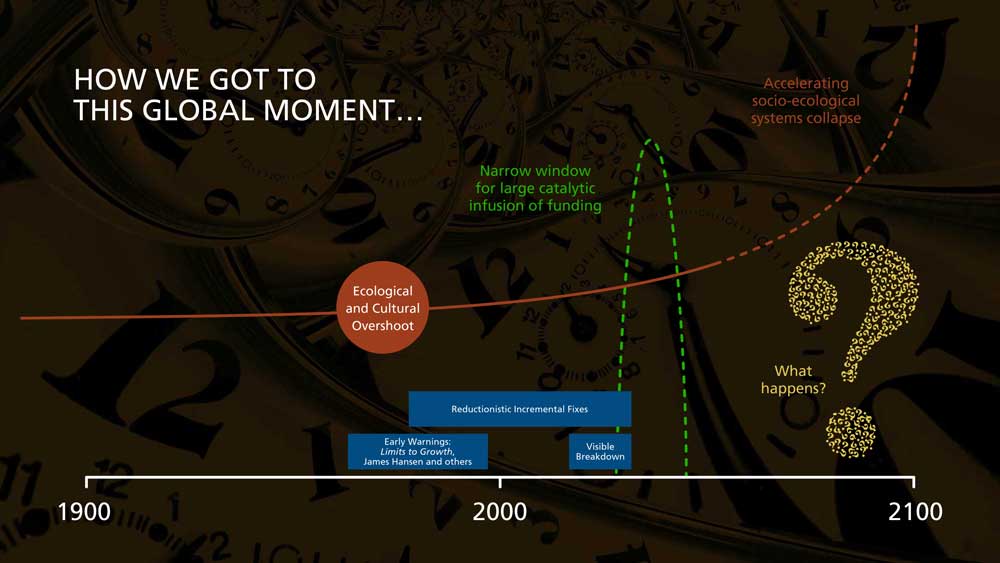
We're in a window of opportunity for an unprecedented pace of investment, with philanthropy playing a leading role. There will still be cascades of collapse, but there can also be cascades of resiliency, which is what living into the story of Bioregional Earth is all about.
Don't underestimate the power of story. Story is the most effective way human beings have to find the right path – or delude ourselves. Said Czech poet, dissident, and statesman Václav Havel, "The system's power comes not from its truth, but from everyone's willingness to perform as if it were true." Everything human beings create is a story. These stories exist in the context of a bigger Overstory we share over time – the meanings, values, and structures that guide us collectively. Indigenous scholar Tyson Yunkaporta talks about wrong story, defined as reductionistic "unilateral or unbalanced ritual, word and thought." It's the overly left-brained, narrow way of attending to the world and being in it that neuroscientist Iain McGilchrist discusses with nuance. If our Overstory is wrong story, then everything we create is wrong story, and we are both trapped and inevitably thwarted by it. Over the last fifty years, we've walked far down the path of wrong story.
The human ability to make meaning is so versatile, so powerful, that it can make almost any existence tolerable, so long as that life is woven into a bigger story that makes it meaningful. It's at just this moment of crisis that our human drive to make meaning reappears as our only salvation… if we're willing to reflect consciously on the ways we make life meaningful – on how we decide what is good, what our goals are, what's worth living or dying for, and what we do every day, day to day, and how we do it.
— Roy Scranton, author and ecophilosopher
Given the accelerating momentum of the polycrisis, we can't "save the world." But we may be able to save places. By saving places, we may ultimately be able to "save" the world (i.e. the diversity of life, including humans), though not as we know it. This is the big challenge toward which philanthropy must orient itself if it truly wants to meet this global moment.
Large-scale problems do not require large-scale solutions; they require small-scale actions within a large-scale framework.
— David Fleming, economist and cultural historian
In the context of a polycrisis – which for the first time in humanity's history is planetary-wide – we need robust, regenerative local action within a strategic large-scale framework. It can't be disconnected activities that you hope will somehow magically coalesce into something meaningful. There needs to be a coherent, large-scale, strategic story.
The story of Bioregional Earth emphasizes the bioregion as the smallest actionable scale that maintains whole-system integrity for ecopsychosocial wellbeing: "I" can't be okay unless "we" (family, community) are okay, and we can't be okay unless the life systems around us are healthy. In other words, the only way to heal ourselves and our communities is to heal the Earth. This means that funders need to fund at the scale of the bioregion, which is the critical regenerative scale that interconnects people, communities, and all life on our planet.
Unfortunately, we've boxed ourselves into a corner. The current economic system we've created – based on extraction, debt, and accumulation of wealth – was never designed to regenerate anything. It can't. It came from and is beholden to wrong story. The more we borrow, the more growth we need to repay it, and that growth often comes at the expense of ecosystems, communities, and whole-system health. When we try to tag on or hack in regenerative practices, they fail because we're asking an extractive machine to do the opposite of what it was built to do.
Right now, philanthropy is answering to wrong story. If our economic system, and by extension philanthropic practices, cannot honor long-term regenerative value, then we must manifest a new Living Flows approach that does. Philanthropy has the power to step out of economic wrong story into the right story of Living Flows – because it doesn't need financial returns.
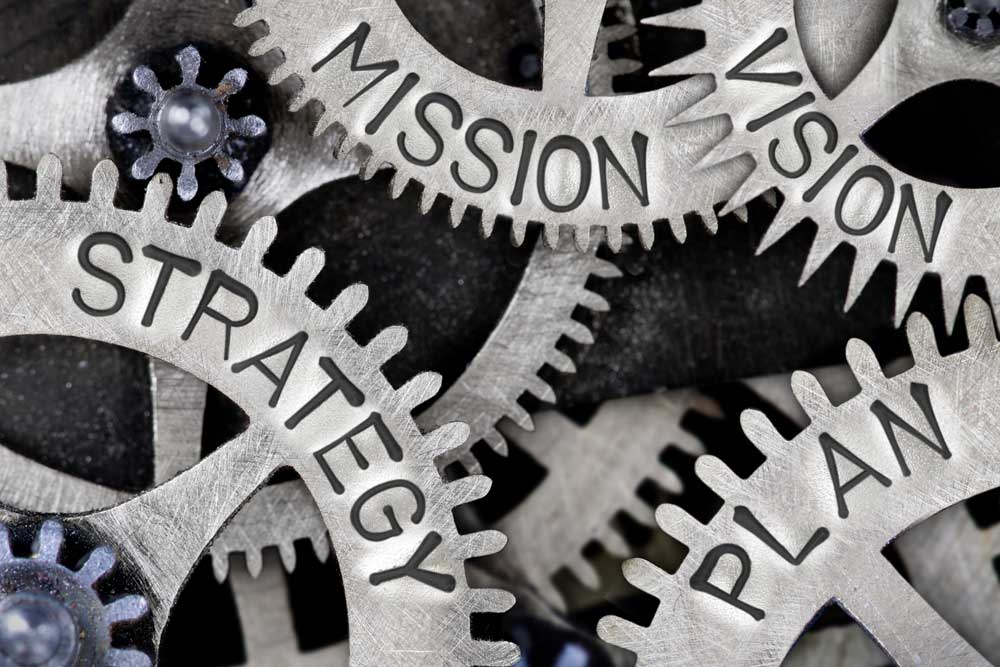
Wrong story is the illusion that we live in a clockwork universe where we humans, as the supposed center of the universe, can make the gears turn in any way we wish. But we don't live in a clockwork universe; we live in an ecological one.
In a time of uncertainty, many foundations are rethinking their "strategic plan" – often with mechanistic assumptions of control, limited vision, and a vague awareness that their investments and philanthropic practices shouldn't be cancelling each other out. CEOs earnestly head out to conferences and meetings with thought leaders, looking for the latest and greatest – often at the expense of listening to people doing real-world work on the ground in their own backyard.
They generally return with some disconnected nuggets, like these examples taken from the social media posts of foundation leaders (some commentary added in italics):
These nuggets have some value, but are largely disconnected abstractions. And they're ultimately meaningless if we remain trapped in wrong story. What are you building toward? How do we create a strategic and coherent whole for moving toward right story?
We won't find what's needed in people alone. We continue to look for "answers" in the human world – flawed at the best of times, and now more than ever steeped in wrong story. We need to look elsewhere and ground ourselves. Real knowledge is innately and foundationally connected to right relationship with the land (in the broadest Indigenous sense of all living entities on a living planet). In Original Instructions: Indigenous Teachings for a Sustainable Future, instructions are shared as an ecology of "stories, embodying some of the most ancient wisdom on Earth from the world's 'old growth cultures'… Original Instructions are how to live on Earth in a good way, in a way that lasts. It's a journey to recover the sacred… Indigenous Peoples have successfully managed complex reciprocal relationships between diverse biological and human cultures, with their eyes on the time horizon of seven generations."
More on right relationship with the land shortly. First, let's look at our love affair with human abstraction that's disconnected from what's real on the ground.

The map is not the territory. What's more, we're in uncharted territory. So, why is there a belief that those with money (and power), or hired to deploy money, know how to flow money, especially in the current global moment?
When it comes to addressing some of our most complex challenges, philanthropic initiatives have been astonishingly ineffective. Over the last forty years, US philanthropic giving has expanded exponentially, while most social and environmental issues have persisted or worsened. Current philanthropic infrastructure is characterized by mechanistic strategic plans and project-level interventions developed at an abstract level with slow-moving, compliance-heavy processes that are designed to prevent misuse of funds but too often prevent their effective use. Despite well-meaning intentions, many philanthropic systems replicate the same top-down power structures as the economic models they often seek to disrupt. How do we shift from "How can we make sure money is spent well?" to "How can we be part of a whole system in which it's inevitable that money will be spent well?"
This analysis comes out of decades of our combined lived experience with philanthropy – project-specific funding, a five-year Collective Impact grant, crowdfunding, Patreon, Gitcoin, Flow Funding, trust-based funding and, most recently, Pando Funding.
There are others who have written extensively about the limitations of philanthropy. For example, the Transition Resource Circle has explored the roots, structures, and constraints of philanthropy. What I offer here are some pattern learnings around what we've experienced trying to do real-world work. This is all in the context of understanding that philanthropy's own infrastructures (from governance and board design to finance workflows and reporting expectations) are designed to support current systems (grounded in wrong story), not emergent ones (through which we might find our way back to right story).
Project-specific funding, for example, offers one-off, fragmented opportunities to (at best) help a few people in a given situation in a given moment. The fantasy is that, cumulatively, many projects may magically combine into a shift for the better. This hasn't happened. And this kind of funding most directly feeds into a limited linear, problem/solution mindset.
One attempt to "fix" this was Collective Impact. The timeline is usually a little longer, and the ambition a little greater. But when a funding call comes, the imperative becomes "bringing together a collective" to be able to apply for funding. This usually isn't based in real relationship, and the "collective" becomes strained over time; organizational priorities in the real world trump collective ambition. Collective Impact is also based on "tackling an issue," like loneliness or social cohesion. Most funders choose their "priority issues." But the reality is that loneliness or social cohesion aren't isolated from health, education, economy, and every other issue out there. In the real world, everything is literally connected to everything else. So, once again, a few people may be helped in a moment of time, without making any long-term, whole-system difference.

Collective Impact also centers the goal of "impact." Every funding application wants you to itemize your "outcomes" and how you'll "impact" the issue at hand. There is hubris here. In the real world, there's no causality, linear paths, or guaranteed results. Everything isn't neatly lined up. And no one put humans in charge of deciding the desired "outcomes" – especially given that we're currently steeped in wrong story. More than that, "impact" is a violent word. My fist impacts your jaw. Or one ball impacts another. It generates a "change" (other balls move) in a certain direction. What if that isn't the direction things need to go? How would you know? In the real living world, the "impacts" of an asteroid or hailstorm are real and do shift things, but often with damage, unintended consequences, and not always for the better. Evolution happens when everything in a living ecosystem interacts with everything else, and there are small learnings/shifts in multiple places all at once. It's a complex, subtle, responsive process. The difference between "change" and "evolution" is relevant. But even if you get that difference, we can't play god.
Every funding application also wants you to describe your Theory of Change. Who are we to have a theory for changing anything? In these turbulent, uncertain times, we can't depend on the stability of human systems. The boundaries through which most of them were created are fickle and unfit for the complex challenges we currently face.
Somehow we came to believe that abstracted description – theories, frameworks, models – is a higher form of knowledge. We consider abstraction more refined, which is actually rather bizarre. When you elevate abstraction, you minimize lived experience. Someone becomes an "expert" when they can talk about something or write a report or book about it. There's a huge difference between writing a book on pregnancy and giving birth to a baby. When we're left with the abstraction, we struggle with how to "implement" ideas – how to do it. We need the grounded knowledge of the hand as much, if not more, than the abstracted knowledge of the head.
I was originally attracted to Pando Funding, especially in a bioregional context, because it seemed to be trying to learn from the real world around us. It seemed to be drawing wisdom from a living ecosystem, the Pando grove. In her unique context of a specific place on the planet in Utah, Pando is the world's largest and oldest single organism. While at first glance she looks like a forest of separate trees, the 47,000 genetically-identical quaking aspens are interconnected as a single organism. A collective root system, hidden from view underground, spans 106 acres to enable the whole grove's health and longevity.
Several months ago, Joe Brewer, one of the Co-Stewards of Bioregional Earth, was in Utah and visited the real Pando grove.
Actually being in the presence of Pando and really listening to the wisdom she offers shifts your whole understanding. Pando Funding uses the metaphor of Pando to create a model, though the originators emphasize "it's not a fixed model." The problem is that the Pando model, relative to the real being, quickly starts to break down. We lose the complexity.
Pando Funding is well-intentioned. It shines a light on some important questions, like giving more decision-making power to those working on the ground. For example, in the context of ecological regeneration work, experience shows it's much more effective when that work is led by local people: "Many restoration projects are run by governments or private organizations with a target-driven focus on planting trees, improving soils or reintroducing species, with limited local input. This often fails to achieve lasting results because of the mismatch with the lives and [contexts] of those most connected to the landscape. Restoration can more effectively reverse degradation, address its causes and benefit local people if communities can shape and lead initiatives to align with their own needs, knowledge, and aspirations."
When you start to "science the shit" out of Pando Funding, you hit some very real limitations. I'm using Pando Funding here as an example of the bigger issue of how we use metaphors and models in general. While they can illuminate, they can also obscure and take us back into wrong story.
Here's an exploration of Pando Funding relative to the real Pando grove…

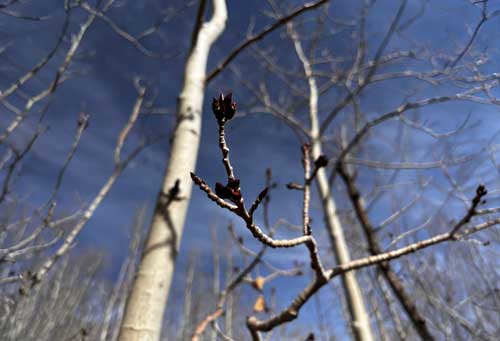

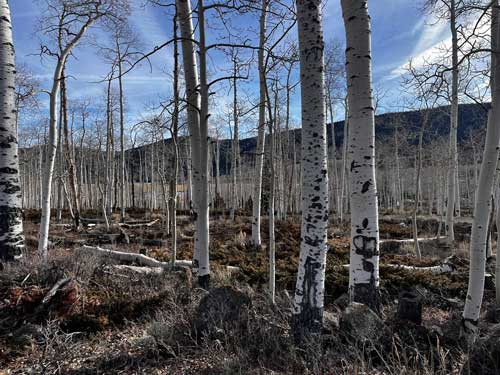
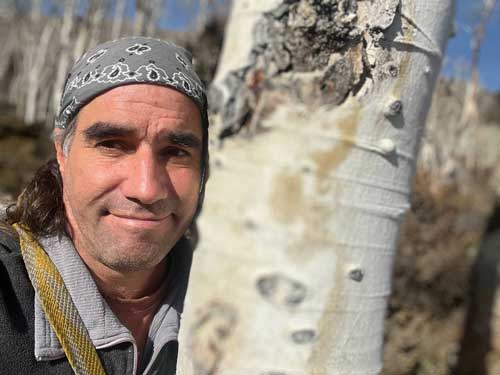
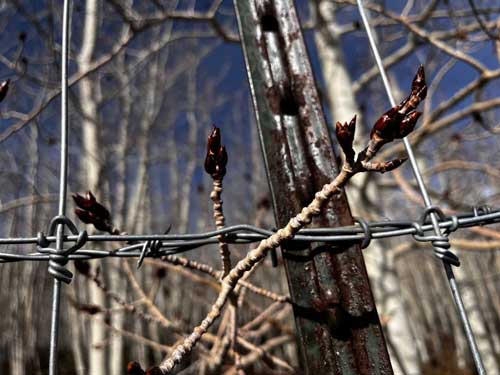
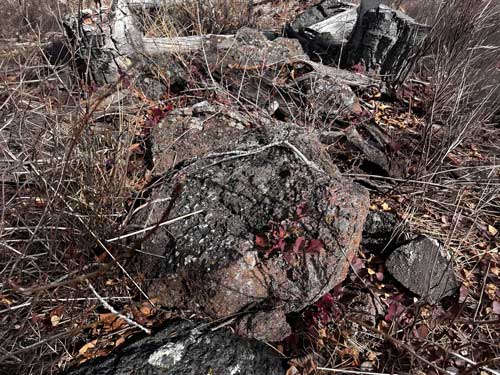
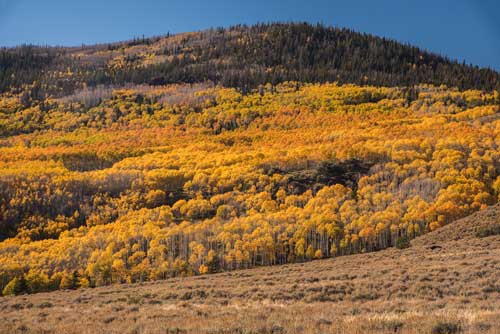

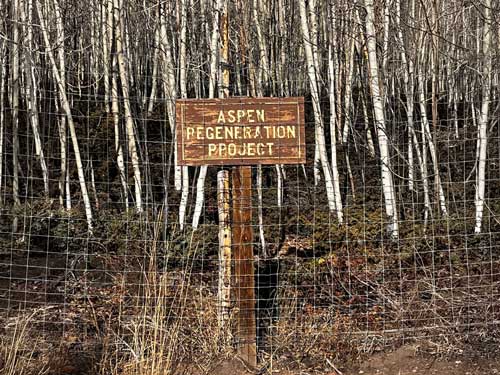
The Pando metaphor is appealing. We can also see the limits of the model. We learned as much as we could from the Pando Funding model. We've evolved into a bigger Living Flows approach. If your model isn't changing, you're not really learning in the real world.
Let's face it, the universe is messy. It is nonlinear, turbulent and chaotic. It is dynamic. It spends its time in transient behavior on its way to somewhere else, not in mathematically neat equilibria. It self-organizes and evolves. It creates diversity, not uniformity. That's what makes the world interesting, that's what makes it beautiful, and that's what makes it work… We can't impose our will on a system. We can listen to what the system tells us, and discover how its properties and our values can work together to bring forth something much better than could ever be produced by our will alone.
— Donella Meadows, systems thinker and author Limits to Growth
The real Pando grove is an invitation and provocation. No human construct can actually replicate Pando, nor should we want to because Pando is a living being in her own unique place. When Joe Brewer visited Pando, one word that kept coming up for him was "indifferent." She's literally indifferent to everything around her, steadfastly focused on regenerating herself.
Pando is a sacred being we can go to for wise counsel. In fact, she's giving us a clue about how to save ourselves. She's one of the purest representations of our greatest challenge: just as Pando is deceptively perceived of as "a bunch of trees," how do you get people to protect something they don't truly understand? Pando calls us to much deeper mythic frames of life across millennia. It calls us to listen and learn from the inherent intelligence of the universe.
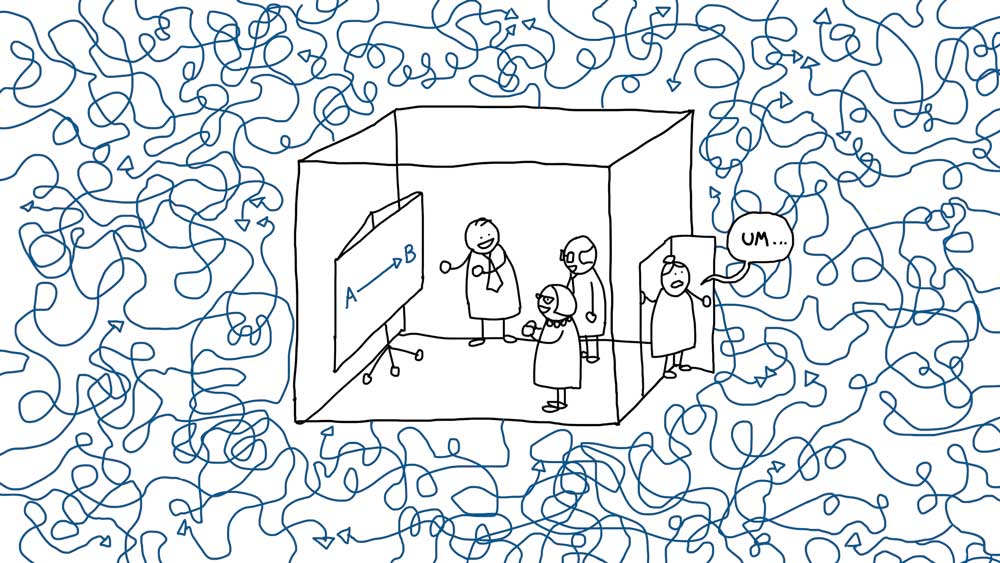
Complex systems are entangled wholes, and require both wisdom in context and astute navigation with constant course corrections. The model isn't the reality, just as the map isn't the territory. Linear wrong story of finding "solutions" to current "problems" doesn't meet the challenge of our current predicament – which is an interconnected mess.
Models and theories of change are abstractions. They are deliberate simplifications of a far more complex reality. While models are useful for providing initial intuition or communicating ideas quickly, they become a burden when they're mistaken for the actual, intricate system they represent. Further, people often "re-create" reality to fit the model, rather than the other way around. You end up trapped in the old story of looking for your keys under the lamppost, when you know that's not where you lost them. A model is an academic exercise, which is far different from actually being on the ground in the real world. We need to re-emphasize lived experience with contextual knowledge, sensemaking, and insight. The practice of permaculture, for example, leads us down this path. It starts with observe the real world and interact with it. That's the difference between figurative metaphor (shallow, misleading, concealing truths) and embodied metaphor (rigorous and deep).
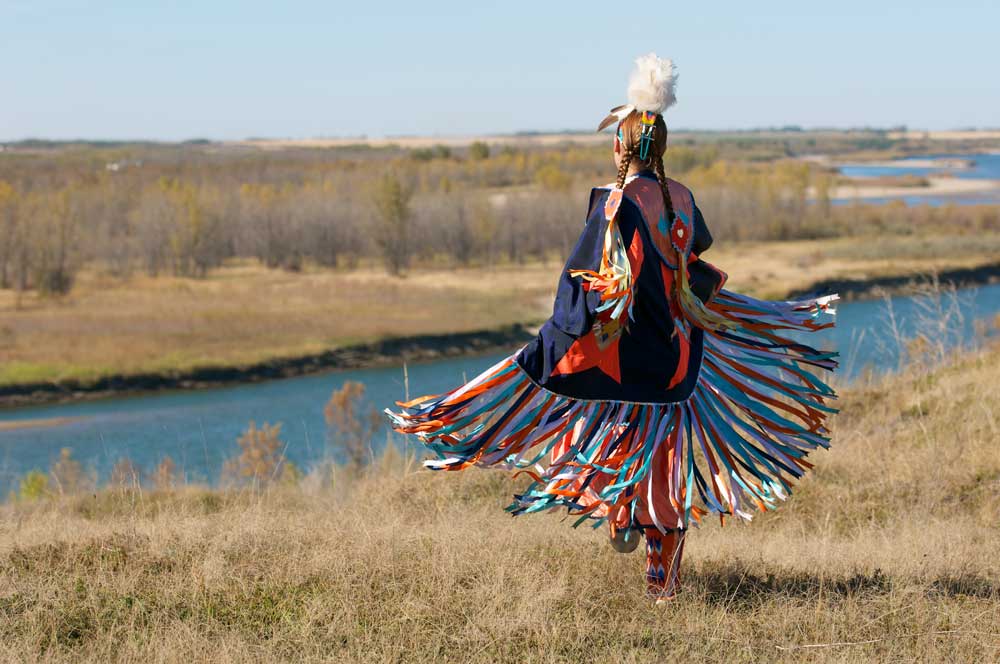
We come from stardust and evolved out of the living systems of the Earth. The human body is 60% water, life started in the ocean, and we grew in the amniotic fluid of our mother's womb.
Rather than abstract models, we need to start with what's real. From an Indigenous perspective, cultures which have lived in harmony with life for millennia, our first relationship is with the land – in the broadest sense of the soil, water, trees and other plants, and all other living entities on a living planet. It's what's real. Everything flows from that. When we're in right relationship with the land, we learn how to be in right relationship with ourselves and each other. How can we have democracy or peace if we don't respect life itself, which starts with respecting the land from which we come? If we're degrading our Mother the Earth, then it follows that we degrade each other and everything else around us.
Tiokasin Ghosthorse, a member of the Cheyenne River Lakota Nation of South Dakota, challenges a familiar line now overused in Western culture, "It takes a village to raise a child." Says Ghosthorse, "It takes the land to raise a child. [This] includes ideas concerning natural conditions, ethics, and protocols based in the Earth communicating and informing cultures about living reality." Sit with that thought for a moment.
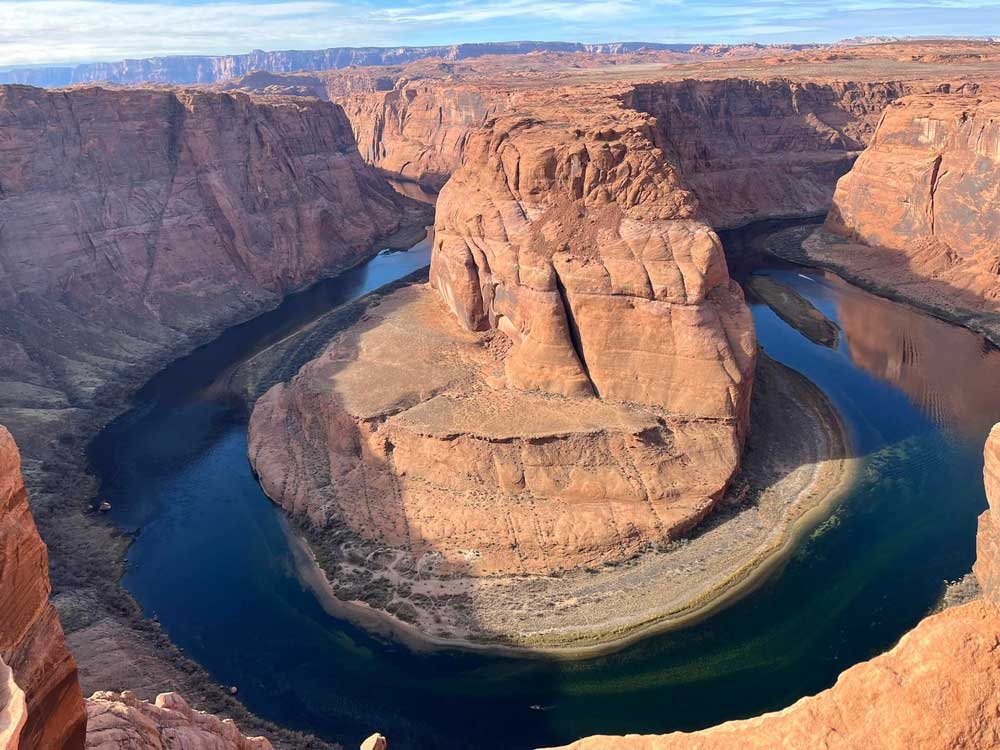
We are part of the circle of life. When we live into that fact, rather than just intellectualize it, it's profound. What wisdom can we learn in relationship with Pando, the Great Lakes, the Grand Canyon, the Rockies, the Sahara, the great rivers of the world, the oldest trees on the planet, and all other life on the land around us?
It's right there, it's waiting for us to pay attention to it, to guide us, through dreams, through visions, through practice. And maybe that's our greatest strength, is getting people reconnected to the source of all knowledge, which is the land.
— Elder Rick Hill, Six Nations of the Grand River
Our present urgency is to recover a sense of the primacy of the Universe as our fundamental context, and the primacy of the Earth as the matrix from which life has emerged and on which life depends… The ancient human-Earth relationship must be recovered in a new context, in its spiritual as well as in its physical functioning.
— Thomas Berry, author and cultural historian
If philanthropy oriented itself to relationship with the land, what might that strategic plan look like? I'm not talking about orienting yourself to "the environment." I'm talking about your relationship with the living systems into which you were born. It would certainly go beyond funding food banks, for example, to funding our relationship with the plants that provide us with food – and through that relationship we are invited into the whole system that seems so elusive when we simply focus on "food security." It would also involve a shift away from a scarcity mindset, like when we talk about land as something to be "conserved" or from which we extract "resources." Instead, we're beckoned into an Indigenous view of looking to create abundance with the land and support life.
Considered by many to be the father of wildlife ecology and modern conservation, Aldo Leopold was a forester, philosopher, conservationist, and educator. Leopold knew that our relationship with the natural world was a key factor in shaping our ability to extend our ethics beyond our own self-interest. Leopold recognized that the relationship between people and other people, and people and land, was a complex one and an intertwined process. The word "philanthropy" originates from the Ancient Greek word philanthrōpía, meaning "love of humanity." What if that very base of philanthropy itself is wrong story, and the real foundation should be a "love of all life?" This is a huge cognitive and spiritual shift – with tremendous power.
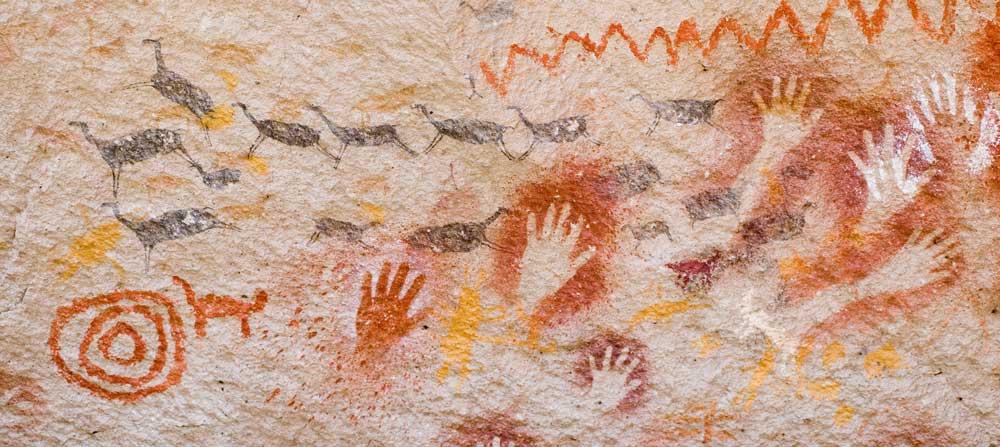
The Indigenous Systems Knowledge Collective offers a very different understanding of wealth and philanthropy. Indigenous economies aren't growth-based, but increase-based, always diversifying to maintain systems that are anti-fragile, abundant and stable, yet responsive to change. In a traditional approach to sharing resources, every interaction must meet two conditions. Money and knowledge may only be transferred if:
There's an emphasis on relationship, but a specific kind of relationship. As we bring in relationship to land, we also need to bring in the larger question of values.
Philanthropy is a thing of privilege. While it's valuable and important, you can only give away your time and your money when you've assembled enough that you are beyond your own means. So it's a concept that wouldn't work as much for Indigenous people because our whole life is about interaction and relationship with other things. The notion of 'profit' would be something we would never get to. If you had too much moose, you would have already shared that with your family. You would have been like, 'Okay, so who do we got to share it with?' You're shamed if you came home and kept all the moose.
— Niigaanwewidam James Sinclair, Anishinaabe (St. Peter's/Little Peguis) and Assistant Professor, University of Manitoba
Liz Liske is Director of the Arctic Funders Collaborative. She is a Yellowknives Dene First Nation member. She talks about Indigenous Peoples and philanthropy, pointing out that "we don't have a word for philanthropy. But how I see it now is that we're the original philanthropists. Giving and sharing is something that we've been doing since time immemorial. A good example of that would be with hunting and harvesting [where everything is shared]… Sharing and giving – the way that it's done [in settler philanthropy] is to benefit the giver or give them a tax break. It's also a way they feed their ego: 'Look at all the things that I've done.' That type of philanthropy represents a very specific difference between Indigenous people and non-Indigenous people. When Indigenous people do it, they don't expect anything in return. They share as a way of honoring that person. I have these things to give myself life and I want to honor your life with these things and continue to give you life too."
This perspective is fundamental to finding our way out of an extractive Overstory. What if we measured wealth by how much we give away in the context of right relationship? Humans are social creatures, so relationship matters. Are you trustworthy, moral, kind? This would begin to build back trust in a social contract that links success with responsibility, in many ways a sacred responsibility. Indigenous Peoples of the Pacific Northwest Coast hold potlatches, ceremonial feasts to mark major life events, transfer rights, and validate social status through the generous distribution of gifts. Meaning "to give," this tradition serves as a vital economic, legal, and social institution. The wealthiest people are those who not only accumulate the most, but who also give it all away in a potlatch, as a sign of their ability to do so.
As Indigenous scientist Robin Wall Kimmerer harvested serviceberries alongside the birds, she considered the ethic of reciprocity. How, she asks, can we learn from Indigenous wisdom and the plant world to reimagine what we value most? Our economy is rooted in scarcity, competition, and the hoarding of resources, and we've surrendered our values to a system that actively harms what we love. Meanwhile, the serviceberry's relationship with the natural world is an embodiment of interconnectedness and gratitude. The tree distributes its wealth – its abundance of sweet, juicy berries – to meet the needs of its natural community. And this distribution ensures its own survival. As Kimmerer explains, "Serviceberries show us another way, based upon reciprocity rather than accumulation, where wealth and security come from the quality of your relationships, not from the illusion of self-sufficiency."
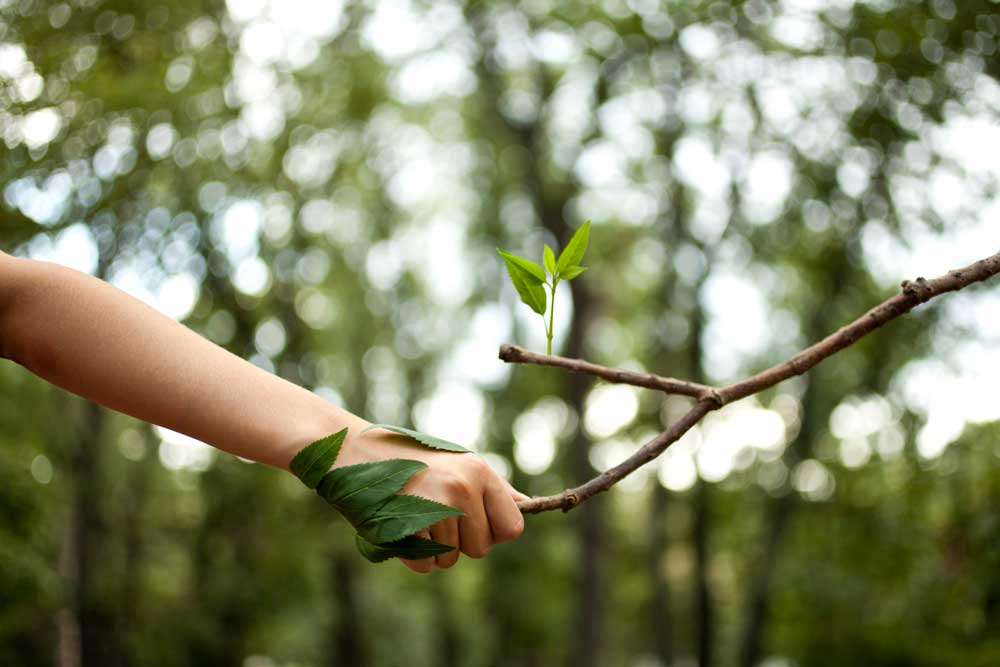
Thinking of reciprocity, over just return, is about recognizing what we receive AND give – not only with each other, but with the living world around us. It asks, what will I do now that I have what I need? If I am supported, how do I support others and all life? In reality, return isn't measured, it's lived, with reciprocity as the circulation of return. It's about staying in relationship, and responding with care across time, space, and all life.
Tiokasin Ghosthorse talks about wealth as responsiveness to Earth wisdom: "The concept of duality, which pits humans against Nature, has led to the exploitation and commodification of the Earth, often justified by Western monotheistic ideologies. It is crucial that we recognize these issues and recognize that these ideologies are not sustainable and equitable when searching for relationships with the living world… The respectful syncretism of mystery and origin is not the grumble of Lakota cosmology but the consternation of a Western identity crisis perpetuated by disconnection to the wiser Elder – Earth. The untapped abundance of Native people's contemplation and consciousness is a daily reminder to speak to a world that has forgotten its origin by the anthropic principles the Western mindset touts for all humankind."
Not only can a relationship with the land inform philanthropy in terms of both practice and spirit, but it can also help us navigate through the polycrisis. Indigenous traditional knowledge of dynamic living systems can provide grounded instructions, logic, and methods. There are no separate disciplines, only a unified way of being and knowing in right relationship. "Law lives in the land, guiding decision-making and predictive modeling in response to innumerable behavioral signals in self-organizing systems. Biocultural alignment is a core design principle in Indigenous processes, systems, and governance. [Indigenous Peoples] also have a deep time focus that demands we care for both ancestors and descendants through actions grounded in ancient logics, ethics, and methods to ensure a liveable future for humans and non-humans of all lands, seas, and skies."
Right story is alive. We need to find our way back to being alive. Haudenosaunee Faithkeeper Oren Lyons frames right story as value change for survival. Tyson Yunkaporta talks about right story as the "metaphors and relations and narratives of interconnected communities, living in complex, real-world contexts of knowledge and economy and ecology, aligned with the patterns of land and creation. Right story never comes from individuals, but from groups living in right relation with each other and with the land."
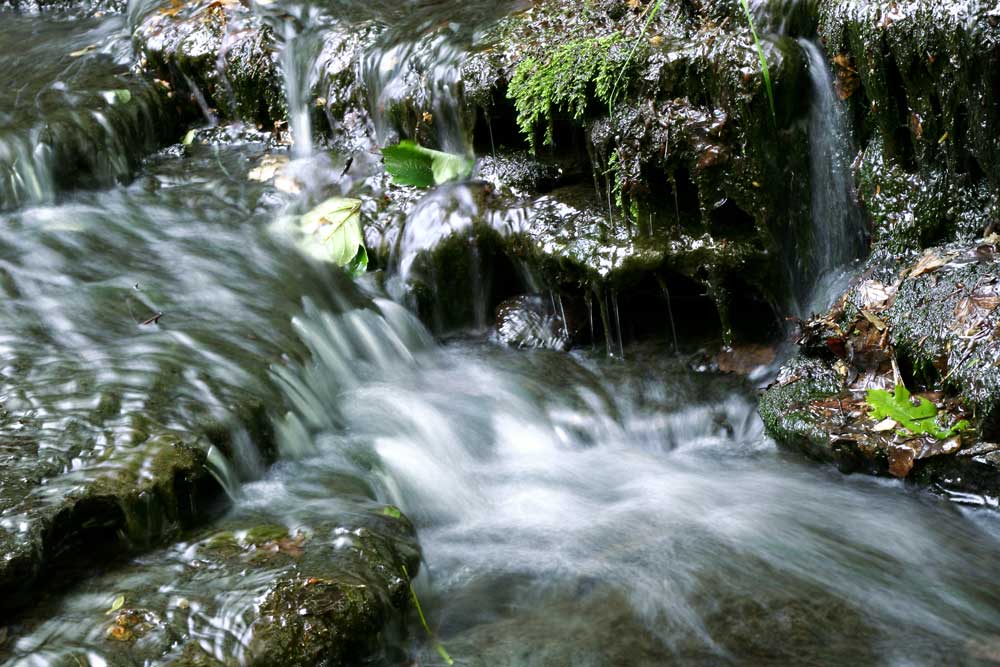
The structure of the rocks determines the flow of the water, and simultaneously the water can reshape (erode) the rocks. They are in relationship. In the same way, how we organize work on the ground and flow funding through it are interrelated – and funders must be active participants in the relationship.
How can we be part of a whole system in which it's inevitable that money will be spent well?" The answer is in structure and flows – better organizing work on the ground and more effectively flowing funding into it. This is what we're doing with the Living Flows approach. It's created on a foundation of life place as a real-world, whole system in which we're continuously learning how to take the next best step.
We begin with life place: the bioregion. The bioregion is the land on which we live our life and which gives us life – food, water, building materials, community and other dimensions of daily living. Rather than being dependent on global supply chains, the focus shifts to a local regenerative economy.
A bioregion is defined through watersheds, geology, ecology, and human culture (including the people who have lived in the place the longest – Indigenous Peoples and their knowledge, reality, and perspective). It's about people in place. That's what makes the bioregion the smallest actionable scale that maintains whole-system integrity for ecopsychosocial wellbeing. The bioregion holds regenerative local action within a strategic large-scale framework – living into the story of Bioregional Earth.
A bioregional approach is both a way of doing things and a way of thinking – a terrain of geography AND a terrain of consciousness. The bioregion is a concrete, real-world pathway (geography) toward right story (a shift in consciousness). We can learn from and be/act in right relationship with the land, and in doing so it shifts our consciousness, toward right story. Scientific research tells us that consciousness doesn't shift in the "mind," but through embodied action in relationship. The physical place enables us to get to a better cognitive place.
Keith Basso, author of Wisdom Sits in Places, talks about a practice "in which individuals invest themselves in the landscape while incorporating its meanings into their own most fundamental experience." It's not about "encounters" with "nature," but rather a shared communal interpretation of metaphysical reality through its embodiment in geographical place.
In a Living Flows approach, philanthropy funds at the scale of the bioregion. This means that everything is organized to flow into and out of the scale of the bioregion. A plot of land or community project takes on more meaning, especially as it becomes connected with other projects, in the context of the story of the bioregion. And the bioregion is fractally scale-linked into subcontinental, continental, and planetary scales. Funding into the bioregion looks like funding some or all of a strategically-chosen Portfolio of Projects woven together by a Core Team, all in the context of ongoing bioregional learning. Each bioregion creates an ecosystem of fundable, interconnected actions within a larger story.
Every issue, situation, or phenomenon exists within multiple contexts simultaneously. For example, a particular community challenge may be related to education, family, health, and technology all at once. Contexts are interwoven, each influencing and being influenced by the others. Traditional approaches to understanding a complex reality often fail because they isolate contexts, addressing them separately rather than as one large, interconnected whole. A whole-system approach embraces uncertainty and ambiguity, understanding that there are no easy answers or clear-cut solutions. It's more relational, dynamic, and responsive to the complexities of life.
In a whole-system bioregional approach, projects are embedded in a web of relationships between people and the land. There may be themes – like education, health, economy, ecological restoration – but a single project will touch multiple themes at any given time, even moving through different themes as it evolves. A whole-system cascade of resiliency from place-based efforts happens as bioregions are interconnected in a planetary network of learning to regenerate Earth.
Projects benefit from mutual support structures and the support of the Core Team, financial and other forms of capital, and synergies between initiatives. When investments reinforce one another within a bioregion, a portfolio can become more than the sum of its parts. This whole-system work is coherent and multiplies long-term effects. As people are empowered in their place, they become better able to work together at the speed of caring for life.
Regenerative designer Ernesto Van Peborgh explains that "bioregions matter so much to the future of systemic funding [because] they are one of the few scales at which ecological reality and human organization can still meaningfully meet… A bioregion, ultimately, is not a static ecological object. It is a living developmental field… That may be the most demanding shift now before us: learning how to participate, with enough humility and intelligence, in the co-evolution of places where life itself remains the deeper architect."
Looking at the whole system, we design simultaneously for conditions, interactions, and monitoring to move us toward whole-system health.
In complexity, where everything is connected to everything else in an intermeshed tangle, we can only take the "next best step." After each step, we continuously course correct through lived experience and learning. But it's important that any "next best step" not be pulled into wrong story, but maintain integrity toward right story. This is where unrestricted, long-term funding, with no expectation of financial returns, is critical.
Philanthropy needs to embrace complexity, which admittedly goes beyond the linear and manageable (a challenge for boards filled with accountants and lawyers). Especially under the pressure of polycrisis, this can feel overwhelming. But complexity is inherent within us and what we do every day – it's woven through every part of our bodies, brains, and ecosystems. The living world offers endless inspiration and role modeling for us on this journey. Philanthropy needs to expand the boundaries of time, scale, effectiveness, evaluation, and urgency that shape and constrain its actions.
Philanthropy can enable those planting seeds for the future to step outside the paradigm of enforced scarcity and move into deeper relationship, movement, and cross-pollination.
Flowing across fractal scales is important here because action at different scales may be needed at different times to take the next best step. If decision-making, for example, is too low to the ground so that people can't see the whole system, the decisions may not be good for whole-system health. It's also important that the funder is part of the system, not apart from it or over it.
We can only be in right relationship with ourselves and each other if we're in right relationship with the land. We need Living Flows whole-system funding that actually operates among living Earth systems.
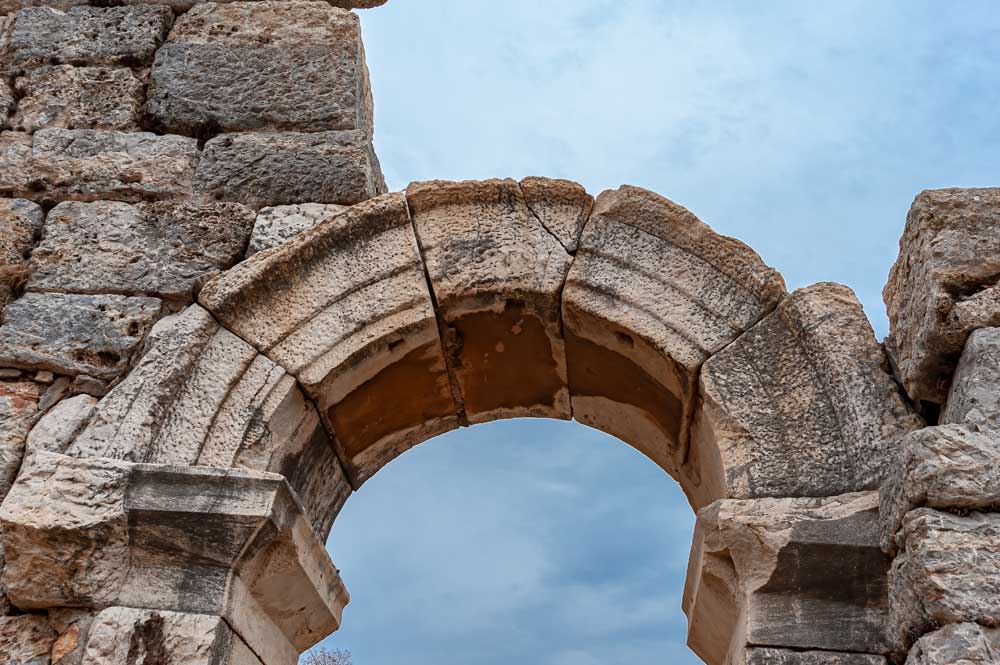
Philanthropy, rather than being a supporting actor off to the side, can be a keystone actor. A keystone is the central, wedge-shaped stone at the apex of an arch that gives stability to the whole. In ecology, "a trophic cascade is a chain reaction triggered when a keystone species re-enters an ecosystem. After a 70-year absence, wolves were reintroduced into Yellowstone National Park. Their return transformed everything. By preying on deer, wolves changed grazing patterns across the landscape. Vegetation began to regenerate. Trees grew back along riverbanks. Birds returned. Beavers reappeared. As root systems strengthened the soil, erosion slowed and riverbanks stabilized. Over time, even the course of rivers shifted. The wolves restored balance by changing the relationships between species." The role of a keystone actor isn't to dominate; they recalibrate ecosystems by changing relationships. Resilience depends on regeneration, emerging when the right actors, relationships, and capacities enable systems to stabilize themselves.
Some funders have acted as keystone actors for the last 50 years, going beyond funding projects to stabilizing resilient ecosystems. It worked. We need to learn from them.
The Building Power report outlines effective action with long-term strategic intelligence. While some funding organizations focused on short-term responses to crises and issues, others were relationship funding over many years. The values, ends, and communities being served are different. But the structural lessons are available to anyone willing to take an honest look. The system that was built to concentrate wealth is the same system that has made alternative collective response nearly impossible. Not coincidentally. Structurally.
"Liberal" funders have tended to focus on project-specific funding, had an aversion to funding overhead and infrastructure, and did not invest in building the talent and skills of people. This became a vicious loop of making organizations and collective response on the ground less effective, which reinforced funders' skepticism. Many "conservative" funders understood something deeper: if you want lasting influence, you don't fund just projects or campaigns. This isn't about a loose collection of fragmented organizations, underfunded and burned out. It's about nurturing an ecosystem. There were investments in skills development, relationships, and long time horizons. They were backed by stable, deep-pocketed funders operating on 30-50 year time horizons rather than election cycles. Beyond "collaboration," individuals found their role and a sense of belonging in an ecosystem of action with a coherent narrative. Conservative actors have built dense, well-funded, stable ecosystems.
We're far beyond surface-level fixes or single-issue thinking. To create regenerative ecosystems, we need good people doing good thinking in right story. Young people are looking for meaning, agency, belonging, and a future. We also need to support experienced older adults alongside young people to develop critical skills like sensemaking in a world increasingly filled with non-sense.
We can get some inspiration from structures like the MacArthur Fellowships, although they're not as systemic as we need. MacArthur frees individuals to do the work they feel is important and that they're most gifted at doing. I know many good people trying to do important work on the pathway to right story.
For a couple of years, we personally experienced relationship-based, flexible funding that was ultimately intended to create a larger, stable ecosystem. The "application" was light, as was the "report." It lifted me up in ways that were transformational (and I'm not one to use that term lightly). It energized me to dream bigger and do more. There was enough funding to be able to breathe, and the open-ended flexibility to be responsive as work on the ground shifted and opportunities emerged. In a career with a lot of sacrifice and frustration, this is the only time I've felt that valued and empowered. I was able to work with integrity and true innovation – outside the constraints of the existing system. With a reasonable amount of funding, we were able to accomplish some amazing and significant things in a short period of time. We were building an effective ecosystem of interwoven people and activities. And then, it seems, the funder lost the plot; they pulled all the funding for all the grantees globally. This, too, is part of an unfortunate pattern in funding.
Having experienced it myself, I know that this kind of funding is the only kind of funding that will work – based in relationship; unrestricted; fulsome enough to build proper systemic capacity; flexible; and long term, without heavy expectations of returns or immediate outcomes.
Philanthropy has a vital role as a keystone actor to stabilize ecosystems of people on the ground working toward right story.
We are lost in human fictions. We know the "right" thing to do. We know it exists. We teach our children right from wrong. And most of us can feel what's right, even as we feel stuck in wrong story.
Again, and again, and again… it comes back to the warnings and wisdom of the Indigenous Peoples who knew how to be in the world without plans and strategies. They did not need deliverables and impact measurements to know that the seasons were changing, or which species would be abundant or sparse in the coming year. They could read the conditions of environment. The ancient ways of not-knowing, were in fact ways of knowing. But without a plan or a clear vision of the goal, the mechanistic thinkers of today get anxious. The addiction to the spreadsheet, KPI, and board approval for a specific outcome is not just not working… It is, in fact, prohibiting real work at a systemic level. Most of the groups who now hold a mandate to work with systemic or complex systems are looking for ways to manage and measure their work. This justification is an apology to an old system. It is dangerous.
— Nora Bateson, author and systems thinker
When I suggest not focusing on short-term measures of "impact " or expecting financial returns, people look at me as if I'm mad, naive, or plain stupid. Part of seeing the reality is understanding that the current fiction is breaking – it has to.
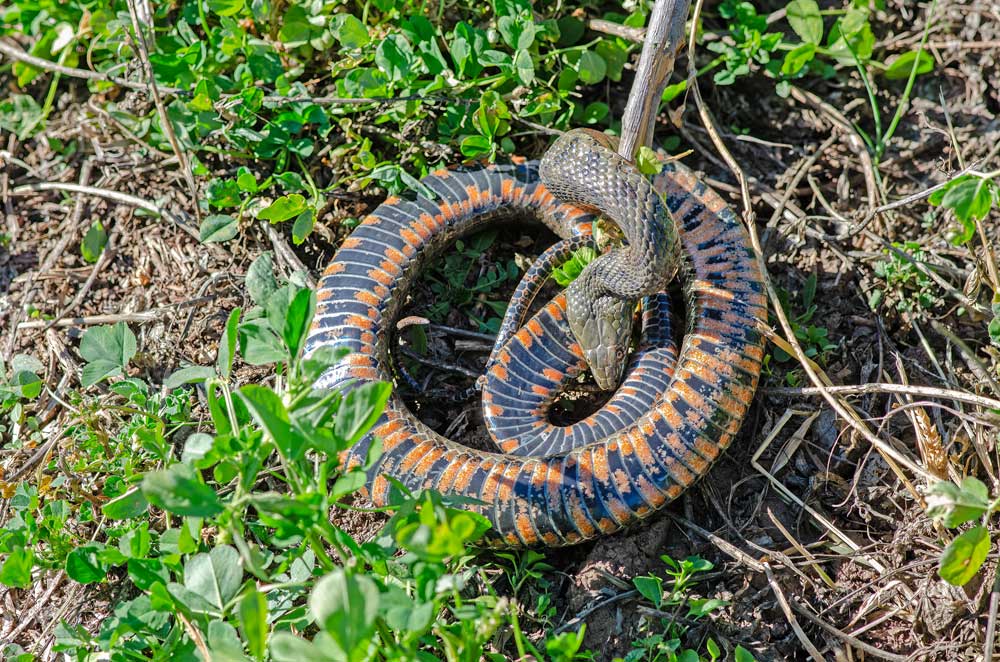
Civilizations rise and fall. The snake is eating its own tail – because we're a part of the eternal cycle of life that constantly moves through death to rebirth. As I've discussed, wrong story has gained momentum. There were those who built structures and created a strategic ecosystem with a reductionistic, extractive logic that everyone fell into. Those who inherited the logic, extended it – some with conviction and others citing pragmatism. It "made sense." There were still some guardrails so that extraction and wealth accumulation could continue. But then even the guardrails came off. Now anything goes. "There are legal frameworks for 'crimes against humanity.' There are other legal definitions in the making for long-term damage to the environment. But nothing to define crime against life itself. No legal or philosophical tradition has named that yet, because the crime of that magnitude has not been possible before."
The dance of life is continuous rebirth, endings leading to beginnings. The mouth of the snake finding its tail is not a failure. It's the form the pattern takes when a particular configuration has exhausted its possibilities. Something ends – but the ground from which it arose does not.
As a civilization, we've lost our integrity. And the window to do something closes a little more each day. Our blind spot is that we continue to look at this as a "human" problem to which we can find a human "solution." It's so bigger than that. Our life stories are woven into the story of the universe in lifetimes across generations. The long history of humanity has been one of deep harmony with all other life on Earth. But now, we find ourselves out of balance with life itself. All generations alive in this moment have a choice. As Dr. Dan Longboat points out, we have a choice between the charred path and the green path. Do we continue to destroy life or do we choose the continuation of life? And that choice involves letting go of human hubris and listening to the wisdom of the living planet.
We need to move from wrong story to right story. Those who may be able to navigate through the collapse we're in aren't going to be the ones with the best plan. They're the ones who stop pretending in the wrong story. That clarity becomes a kind of ground that enables you to step outside the existing system. To draw on Václav Havel, hope isn't the conviction that everything will be all right, but the belief that you're doing the right thing.

Philanthropists are the only ones who can take money from the system and step outside of the system in service to life. Expecting financial returns is, in fact, illogical. People are broken and landscapes are degraded. You can insert whatever aphorism you wish here… You can't get blood from a stone. It's time to pay the piper. A person with a broken leg can't be expected to walk on it until it heals. And when you walk into a store with a sign that says "you break it, you buy it," and your coat brushes against an expensive vase causing it to fall and smash into a hundred pieces, you don't get a "return" when you pay for it. You're doing the right thing.
The current financial system extracts rather than circulates. In a system set up for debt and extraction, we need to step outside the system. Otherwise, whatever we do won't get us onto a pathway toward right story.
Howard Buffet, son of the Oracle of Omaha Warren Buffett, says there are three things wrong with existing foundations: 1) Most distribute only 5% of their investment assets annually; 2) They include operating expenses as part of the spend-out (and interestingly won't cover the operating expenses of most grantees); and 3) They play it safe and don't take enough risks.
Recent statistics show private foundations in the US are sitting on $1.5 trillion, with an average of only 6.67% – or $100 billion – disbursed annually. The rest, around $1.1 trillion, is locked away in more than 100,000 tax-exempt foundations. There are billions more stashed away and left unspent in unregulated Donor Advised Funds (DAF). The issue becomes more urgent given the looming $124 trillion Great Wealth Transfer.
In Canada, wealthy families set up their own private foundations and donate into them. Donations become part of a stockpile of funds, sometimes adding up to hundreds of millions of dollars. Only a small fraction of these ever-growing stockpiles leaves the foundation and ends up in what we might think of as charitable activity. Much of the money that does trickle out ends up going to charitable institutions that offer desirable naming rights in return (like universities, hospitals, concert halls). The stockpiles are money for which the wealthy donors have received major tax concessions. The amount of money sitting in Canadian private foundations is around $107 billion – sitting idle, not circulating, not helping anything or anyone.
Remember that money isn't a hard asset, just a floating promise. It may be worth nothing tomorrow, as the global financial system becomes increasingly unstable. In this moment, it makes sense to do something worthy with money while it's still worth something.
In an attempt to shake the money tree of private dollars, new schemes have arisen. Impact investing and blended finance are an apology to an old system. Blended finance provides funding, often grounded in philanthropy upfront, and reallocates risk. Repayment remains an issue, even if it's over a longer time period or at no interest. And the real social and ecological regenerative work necessary is over time periods of 20 to 200 years – which isn't appealing to those who want returns now, not generations from now.
The challenge becomes even more insurmountable if you're looking for an investment in "life," or what might be framed as nature finance. There are three distinct concepts in play here: economic value, financial cash flow, and investability. Nature underpins significant economic value, yet rarely generates predictable, capturable cash flows. Instead, it produces public goods and avoided losses. These benefits are real – but don't show up neatly as revenue streams. Finance depends on cash flows, enforceable claims, and risk-adjusted returns. Nature, by contrast, is largely non-excludable and system-wide. Its value is diffuse, shared, and often realized as "losses that never happen." This makes it difficult to monetize and even harder to scale into investable assets. There are some exceptions: forestry, regenerative agriculture, and carbon markets can generate revenue. But beyond these commodity-linked sectors, most ecosystem services remain structurally misaligned with financial models. The living world is indispensable to the economy, but not inherently investable at scale. Until we confront this fact honestly, we'll get nowhere.
There are some cracks in what feels like an impenetrable system of concentrated wealth and power. Some disruptors, who by no means constitute a majority of the ultra-wealthy, are starting to work together to address the need for reparations and healing. A new generation of wealth holders are rejecting holding on to wealth and traditional philanthropy, with its focus on creating perpetual foundations and institutions. Instead, they're aggressively moving money, often through intermediaries that share decision-making, to the grassroots. Individual philanthropists may have the most flexibility – taking a giving while living approach.
The competition for funding dollars has never been greater. Many groups are turning to major donors because they see that America's wealthy are growing richer – the number of US households worth $30 million or more has nearly doubled in five years, to more than 190,000. The focus is increasingly on the major gift. Organizations now have "philanthropy advisors," often a team of them, who can offer donors strategy and advice about philanthropy writ large. And the wealthy seldom act alone. They operate within an ecosystem of wealth advisors, philanthropy consultants, donor collaboratives/circles, and other players who curate a donor's portfolio, shaping how and when money moves. There is nowhere near enough awareness of the severity of our current predicament among these decision-makers in philanthropy, including foundation board trustees who have significant influence.
Since 2000, two dozen donors have given single donations of $1 billion or more, according to data from the Philanthropy 50 reports, with philanthropists such as Bill Gates, Warren Buffett, and Jeff Bezos giving multiple gifts of $1 billion or more.
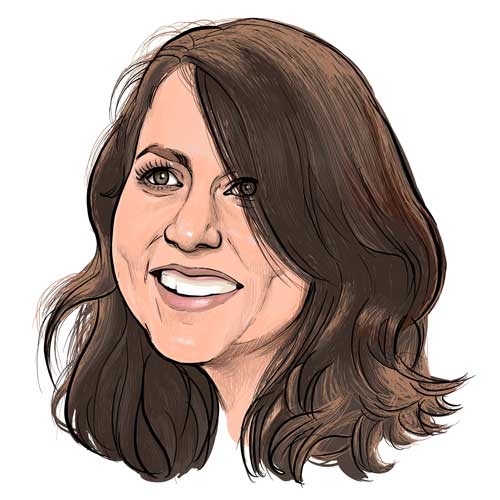
MacKenzie Scott's philanthropic approach stands out. It's characterized by large, rapid, unrestricted, "no-strings-attached" donations – which is rare among philanthropists, who favor restrictive, slow, or self-branded giving.
Scott has given more than $26.3 billion to over 2,700 nonprofits since 2020, and nearly all those donations have been unrestricted.
In 2019, Scott had signed the Giving Pledge, started by Warren Buffett. Buffett wanted to establish a new norm, but it hasn't turned out as he hoped. The Giving Pledge was born in an era where there was a belief in both big capitalism and big philanthropy. Being seen as a "good billionaire" who gave back was important. But in the last couple of years, signatories have withdrawn, amending pledges to account for for-profit ventures. Billionaires are also spending more than ever on American elections. There's a feeling that the Pledge "feels old school. People now think [they] can keep [their] head down and keep making money. [They] don't have to put up with this charity charade anymore." Elon Musk, the world's wealthiest person, has said that his businesses are philanthropy, since he's giving back via business success and lifting up the economy.
We don't need more business as usual. We need a circulation of Living Flows. What Scott is doing is freeing money and circulating it. This is counter to current trends where funders want to know more than ever before, probing finances, operations, and impact. The sense of "management" is increasing, not decreasing. As well, while funders say they want "immersive experiences" to understand what their funding does, this often becomes performative rather than substantive. Funders generally don't have the time or patience for real relationship, or even lunch or a cup of coffee. But right relationship in the context of mutual learning is the only pathway toward right story.
There's significant value in no-strings giving, not the least of which is that it enables recipients to step outside the system. The fact that recipients can use the money as they see fit is almost as important to them as the money itself. The gift creates a safety net and gives permission to be more creative and try new things. From recipients: "When you have restricted funds, it makes it hard to move and pivot quickly, so this really does give us the ability to move in much more flexible, nimble, and creative ways… What's key about unrestricted funding is it cedes the power for how to respond to challenges and needs to [those on the ground] and gives them the freedom to decide how they want to respond in real time to the challenges they see."
A report released by the Center for Effective Philanthropy reveals that Scott's gifts have been a boon for grantees, enhancing their long-term finances, leadership, and local communities – bucking skepticism about the downsides of unrestricted giving, namely that it could lead organizations down an unsustainable financial path. Over 60% of grantees in the report said they used Scott's gift as evidence of their credibility with other funders, while nearly two in five said they now ask for larger and less restricted grants from funders.
Scott's gifts are a confidence boost and burnout balm for community leaders. Said one, "We talk about transformative gifts, and sometimes that word is used lightly, but in our case, it transformed everything – the way that we work, the way that we organize ourselves, the kind of talent we recruit. It allowed us to move into what we needed to do." Unrestricted funding "shouldn't be such a foreign concept" in philanthropy, she said. "It's surprising to me that this approach continues to not be fully embraced because we should trust our leaders who are living and breathing this work, are so close to the ground, and are best equipped to make decisions."
From Scott's own writings, we get insights into the "big why" behind her Yield Giving approach. Yield is named after a belief in adding value by giving up control.
In her very first message, she draws on a passage from Annie Dillard's The Writing Life: "Do not hoard what seems good for a later place in the book, or for another book… The impulse to save something good for a better place later is the signal to spend it now. Something more will arise for later, something better… Anything you do not give freely and abundantly becomes lost to you. You open your safe and find ashes." Says Scott, "Something greater rises up every time we give. Immediate results are only the beginning. Their value keeps multiplying and spreading in ways we may never know."
In a later message, she says that "putting large donors at the center of stories on social progress is a distortion of their role. We are attempting to give away a fortune that was enabled by systems in need of change. My team's efforts are governed by a humbling belief that it would be better if disproportionate wealth were not concentrated in a small number of hands, and that the solutions are best designed and implemented by others. Though we still have a lot to learn about how to act on these beliefs without contradicting and subverting them, we can begin by acknowledging that people working to build power from within communities are the agents of change. Their service supports and empowers people who go on to support and empower others."
In another message, Scott talks about the word "philanthropy" as something she never "loved or identified with. A lifetime of cultural references associated it with financially wealthy people who believed they knew best how to solve other people's problems. Since I did not believe myself to be such a person, I had always felt more kinship with people who offered a couch when someone said they needed a couch."
In her December 2025 message, Scott notes that "the potential of peaceful, non-transactional contribution has long been underestimated, often on the basis that it is not financially self-sustaining, or that some of its benefits are hard to track. But what if these imagined liabilities are actually assets? What if these so-called weaknesses foster the strengths upon which the thriving (or even survival) of our civilization depends?" She shares a prophecy from a Hopi Elder…
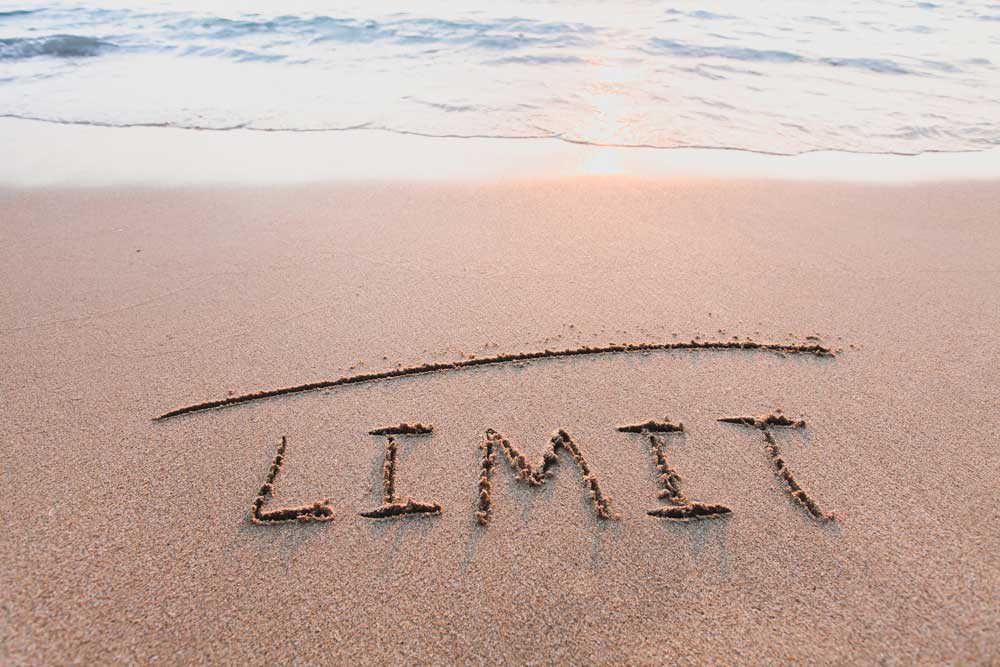
We're at the limit of planetary boundaries and human conscience. We have a sacred responsibility to step back into right story.
In this critical moment, what should we be investing in life?
You are entrusted with everything… and entitled to nothing.
— Sufi proverb
The "bottom line" of a financial statement tells you whether you're making money, losing money, or breaking even. The bottom line of this exploration of philanthropy is whether you're doing what matters, not doing what matters, or just playing along with the status quo (wrong story).
We're in a thorny, entangled, complex mess. There's a window of opportunity for a large catalytic infusion of funding, and philanthropy can take the lead as a keystone actor. While your money is still worth something in a rapidly unraveling world, philanthropists can take from the existing system and step outside the system to fund in service to life, without expectations of short-term fixes and financial return.
Don't get lost in abstraction. Stay grounded. Our blind spot is that we continue to look at this as a "human" problem to which we can find a human "solution." Real knowledge is found in right relationship with the land – in the broadest sense of all living entities on a living planet, in the context of lifetimes across generations. When we're in right relationship with the land, then we learn how to be in right relationship with ourselves and each other. We need to get back into balance with life itself. That's what matters. That's what has always mattered.
As a funder, focus on the right question: How can we be part of a whole system in which it's inevitable that money will be spent well?
We can better organize work on the ground and more effectively flow funding into it. This is about local bioregional action within a strategic large-scale framework of the story of Bioregional Earth. This isn't abstract theory; it's real work happening on the ground right now. The bioregion is the only appropriate actionable scale, the most powerful scale that interconnects people, communities, and all life on our planet. The bioregion is a concrete, real-world pathway (geography) toward right story (a shift in consciousness).
Follow the Indigenous premise that money and knowledge may only be transferred if the exchange establishes or improves an authentic, ongoing relationship, and that relationship must increase the health of land-based systems near and far, through local practice and non-local knowledge exchange.
This whole-system regeneration work – social and ecological – needs large, rapid, unrestricted, "no-strings-attached" funding. A Living Flows approach will need a kind of Global Potlatch, a shift from ROI to ROL, Return of Legacy. Regeneration isn't an action in time; it's a relationship across time. This is the legacy project of our time.
We need to seed grounded possibilities in the hands of those on the ground, at the right scale, in the context of an appropriate larger framework, letting life do its miraculous thing in complexity and emergence. Do you feel your role in the web of life?
At the end of this long analysis, there's nothing left for me to say. There's everything left for you to do with your money.
Explore more as part of our upcoming invitation-only webinar series Living Philanthropy. The series is specifically for wealth holders and stewards/advisors, philanthropic foundation staff and advisors, board trustees, and family office professionals. We're also available for one-on-one guidance on how to flow wealth in a way that matters. Reach out to us at the Legacy Project if you're interested and to find out more.